
Just in…
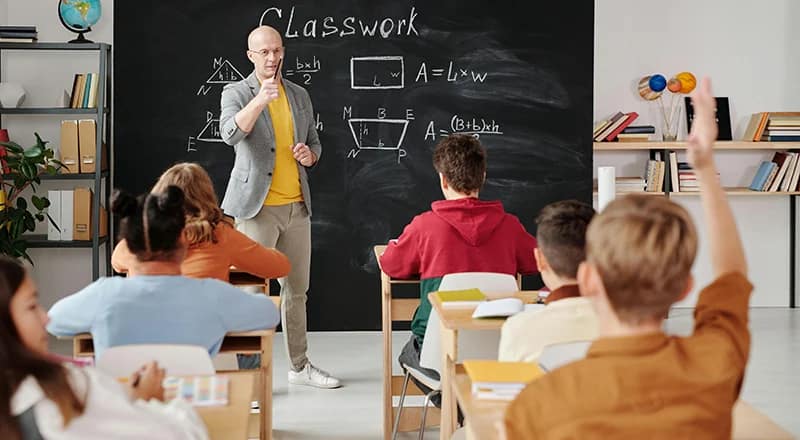
The Ministry of Education has officially announced that UAE schools will resume with in-school learning from Monday, May 11, 2026.
This applies to all enrolled children, students, educational staff, and administrative staff in public and private schools and nurseries.
The announcement was made via its official Instagram account on May 10, 2026.
The Ministry of Education reaffirmed the commitment of educational institutes to implementing the approved safety and security protocols and procedures, supporting the smooth continuation of the educational process, while maintaining preparedness to implement alternative learning models when needed and in line with ongoing developments and continuous assessments.
The Ministry also confirms the continuation of coordination with educational institutes to ensure a smooth return to in-person learning.
Parents, remember, to stay up-to-date for everything related to UAE schools, follow official sources only.
Expert advice on how to talk to your kids about coping with uncertainty

If your children are asking difficult questions about what is happening around them, here’s some practical advice shared by Dr Sara Daly-Butz from Insights Psychology.
How to talk to children about uncertainty
For children and teenagers, sudden changes to daily life can raise difficult questions and strong emotions. Children may ask questions such as “Are we going to be okay?” or “Why is this happening to us?”. For many parents, knowing how to respond can feel challenging. As a clinical psychologist working with Insights Psychology in Dubai, I often support families navigating uncertainty. While every child responds differently, there are practical ways adults can help children feel calmer and more secure during times like this.
How to respond to difficult questions
When children hear about conflict or sudden disruptions to routine, their brains are essentially asking one core question: “Am I safe?” Because children do not yet have the cognitive maturity to fully understand global events, uncertainty can feel overwhelming. Their imagination may fill in gaps with scenarios that are more frightening than reality. For this reason, children benefit from simple, honest and contained explanations rather than detailed discussions.
For example, if a child asks: “Are we going to be okay? You might respond: “Right now we are safe. Adults are working to manage the situation. Our job today is to keep going with our routines and take care of each other.”
If a child asks: “Why is this happening to us?” A helpful response might be: “Sometimes difficult things happen in the world that we cannot control. What we can focus on is staying together and continuing with our day.”
Parents often try to help by providing extensive reassurance or long explanations. However, it is usually best to avoid speculating about events or discussing adult worries in front of children. Calm, clear answers are often the most reassuring.
Understanding children’s reactions
Children may not always express stress directly through words. Instead, they may show changes in behaviour. Common reactions during uncertain times can include irritability, clinginess, repetitive questioning, restlessness, or withdrawal. These reactions are stress responses rather than misbehaviour. Understanding this can help adults respond with patience and reassurance rather than frustration.
Techniques to support children during moments of distress
There are several simple techniques that can help children regulate their emotions when they feel overwhelmed. One helpful strategy is grounding through the senses, sometimes known as the 5-4-3-2-1 technique. You can ask your child to name five things they can see, four things they can feel, three things they can hear, two things they can smell and one thing they can taste. This helps bring attention back to the present moment.
Another useful tool is box breathing, which helps calm the nervous system. Encourage children to breathe in for four seconds, hold for four seconds, breathe out for four seconds, and hold again for four seconds.
Parents can also help children understand their feelings by explaining that the brain has an “alarm system”. When something feels frightening or uncertain, that alarm becomes louder. Calming activities help the body switch that alarm back down.
Finally, maintaining predictable routines is one of the most powerful ways to support children. Even when schedules change, keeping familiar rhythms such as mealtimes, bedtime routines and study periods signals to the brain that life is continuing and that things are safe.
Helping parents find calm
Children often take emotional cues from the adults around them. Psychologists refer to this as co-regulation; children borrow calm from the nervous systems of the adults caring for them. In practice, this means that a calm adult presence can be one of the most powerful stabilising influences for a child. Of course, this can be difficult when parents themselves feel anxious or overwhelmed. One helpful step is setting boundaries around news consumption. Constantly checking updates or scrolling through social media can increase stress. Instead, it can be helpful to check reliable updates at specific times during the day. It is also useful to focus on what is within your control. While global events may be uncertain, families can still maintain routines, spend time together and create moments of calm at home.
Images: Getty Images